
On Land
In conversation with composer Ben Cosgrove

As a writer, I know and revere the power of words. But I also recognize the limitations of language, how some emotions and experiences lose their essence when pried into a sentence.
Thankfully, here on Earth, we have other ways of expressing ourselves. Where language falls short, music can pick up the slack, transcending the limits of syntax and grammar.
Last fall, I had the chance to explore the interplay of language and music with Ben Cosgrove, a brilliant composer and multi-instrumentalist who finds inspiration in landscape and environment—the same places I find my inspiration as a writer.
With encouragement from a mutual friend who saw this overlap in our work, we pulled together a collaborative performance called On Land. One part book reading, one part piano concert, we wove together pairings of songs and excerpts that felt synergistic, the notes and words lending new context and texture to each other. It was one of the most creatively gratifying experiences I’ve had.
Ben recently released a new album, called Topograph, which includes some of the songs he performed during On Land. I caught up with him this winter to learn more about his creative process and how he thinks about the themes that we both wrestle with in our work. I’ve shared some highlights from our conversation below.
But first, here’s a little snippet of the On Land experience:
If you have Strata, read the italicized prelude to Mud (Part III); then listen to this gorgeous song Refuge.
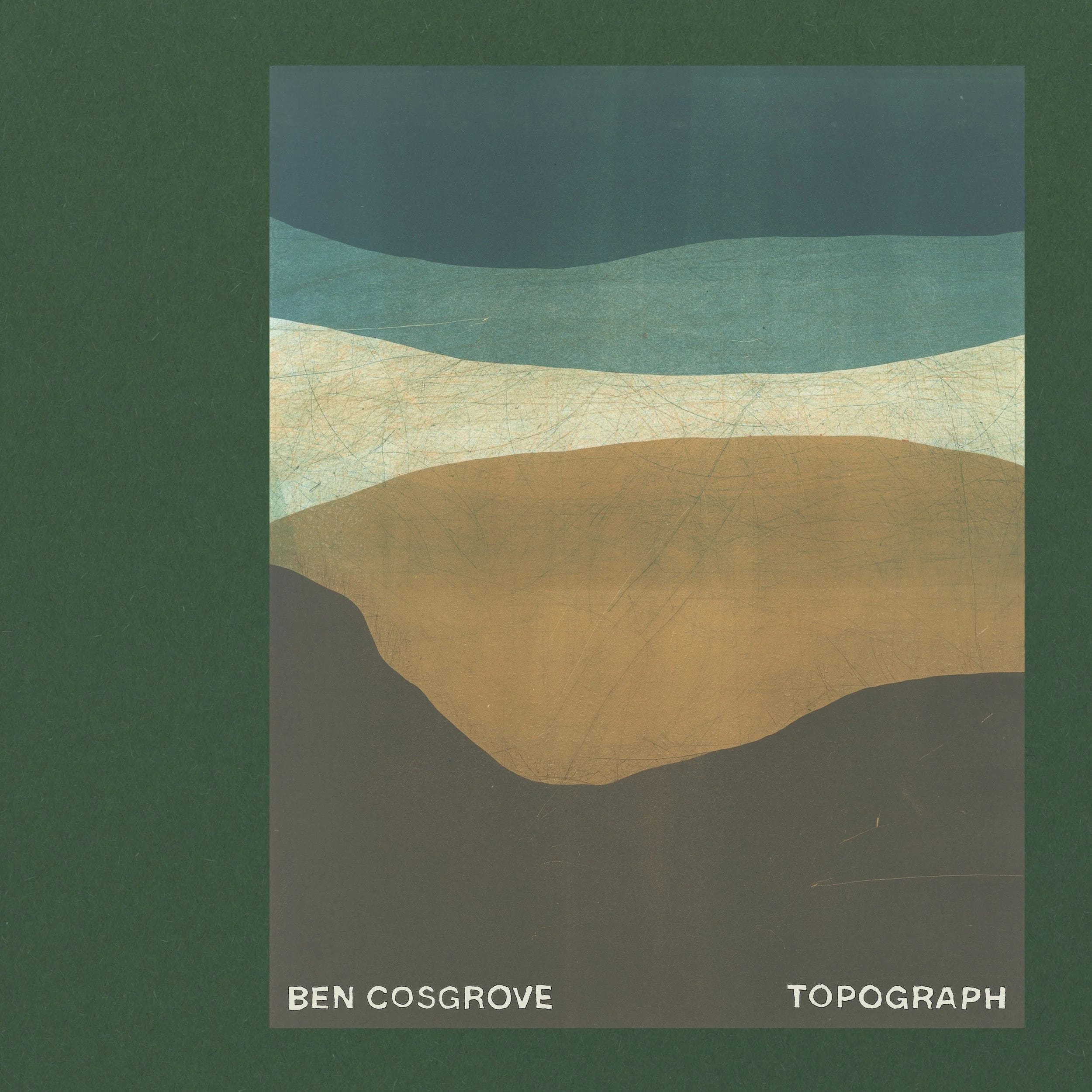
Topograph explores tumult and change across different types of landscapes. How did the concept for this album come to you?
I began putting it together when I was on a residency in Washington State, just north of the mouth of the Columbia River. The entire landscape out there is completely insane. It’s changing all the time. It’s dunes that are shifting all the time and it’s cliffs that are eroding into the ocean. The river is miles wide at that point, so all of these islands sort of drift around and change location. Mount Saint Helens is in view from there, so you can see that the literal topography of the place looked dramatically different 45 years ago.
I think the reason I was drawn to writing music about air and water moving land around is in large part because I was writing it during such a tumultuous time in the world. Whenever I am in a time when I feel like things are a bit upside and out of control, I find it kind of comforting and reassuring to look at landscapes that never stop reshaping themselves and are never in their final form. Even a dramatic reshaping of a landscape is not the end of its story.
That’s beautiful. Can you say more about how the inevitability of change feeds your creative process?
I really find it helpful to embrace change and impermanence, and to remember that it’s part of how the entire world has always worked.
It also makes for good music. It’s better when things are moving and unpredictable and you’re not trying to depict something static. A cool thing about music is that it literally only works by moving through time. And there’s something about landscapes that works that way too.
What does it look like to write music about a landscape?
I’ve always really liked the process of thinking about how “this thing” is like “this other thing” in some way. Like, how is this geologic phenomenon that I’m looking at like a feeling I have? How is this avalanche feeling like a heartbreak?
One of the strengths of instrumental music is that it’s really good at capturing feelings without being too specific about them. You don’t have lyrics to get people in a specific spot. You are just stirring their emotions in one way or another just using sounds. And I think that that’s often how landscapes feel to people, too.
One of the tracks that I especially love on the album, which evokes a real feeling of comfort, is Refuge. Where did the idea for that one come from?
I had been kicking around a version of that melody for years and years. The first version, which doesn’t really sound much at all like what it wound up being, began as a commission from two friends of mine who were getting married in the Connecticut River Valley in Vermont. I wanted to write about the coziness of hills. I have another song that’s about how disoriented I feel in big wide open places. I think I’m just that kind of guy who likes rolling river valleys and who likes the feeling of being held by a landscape.
The place where this song came into its own was at a residency I had in the Upper Mississippi River National Wildlife Refuge. The river in the spot where the refuge is goes through the Driftless Area, which is this part of the Midwest that is very unlike the rest of that region landscape-wise. Instead of being flat it’s all these rolling hills and big bluffs around the river and it feels to me a lot more like southern Vermont. I’ve loved this area for years precisely because of this. Not only is it literally a wildlife refuge, but to me it’s a refuge of these comforting, orienting hills and valleys in the middle of America.
I’m wondering if or how your songs help you understand change over deep time.
I’ve always struggled with wrapping my head around deep time. At my core, I’m a very kind of squirrely, frantic, fast-paced, live-in-the-moment kind of guy. Writing music about this stuff does help me slow down and think a lot about where a given landscape came from, where it is going, and all of that helps me feel more at home in the world.
***
Many thanks to Ben for chatting with me, and for giving me permission to share Topograph here. Go buy it wherever you get your music!
Laura, I am grateful that you are on Substack. Thanks for bringing new people and deep time ideas (Strata) into my life. Katharine